Starting by hand.
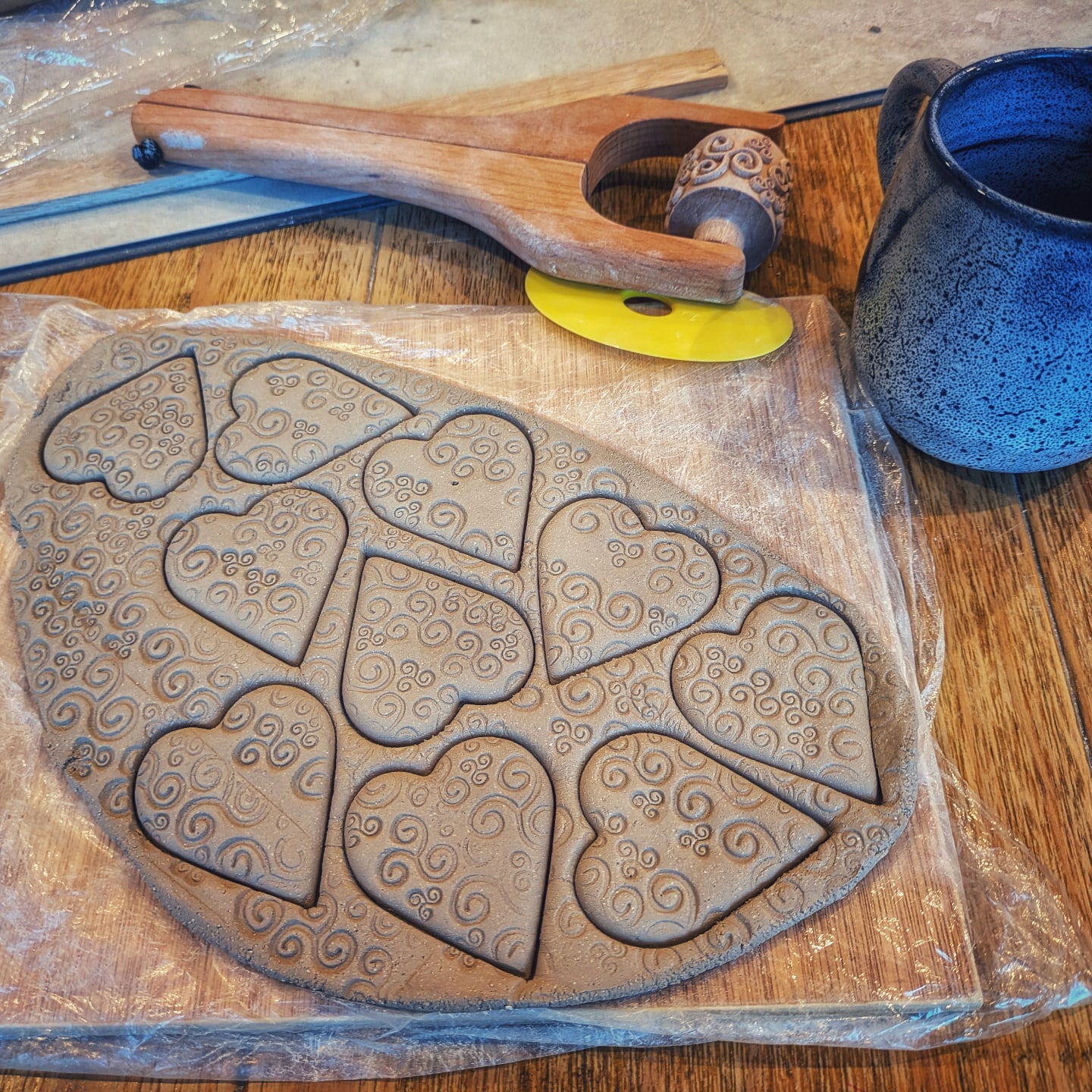
Most of my raku work starts by hand. I usually make a few pieces at a time, repeating a shape without trying to make them identical. The small differences from handling the clay are part of what I like about the finished work.
Raku is fast and hands-on. The dramatic bit happens at the kiln, but there is a lot of making, drying, glazing and preparation before anything gets near the flames.

Most of my raku work starts by hand. I usually make a few pieces at a time, repeating a shape without trying to make them identical. The small differences from handling the clay are part of what I like about the finished work.

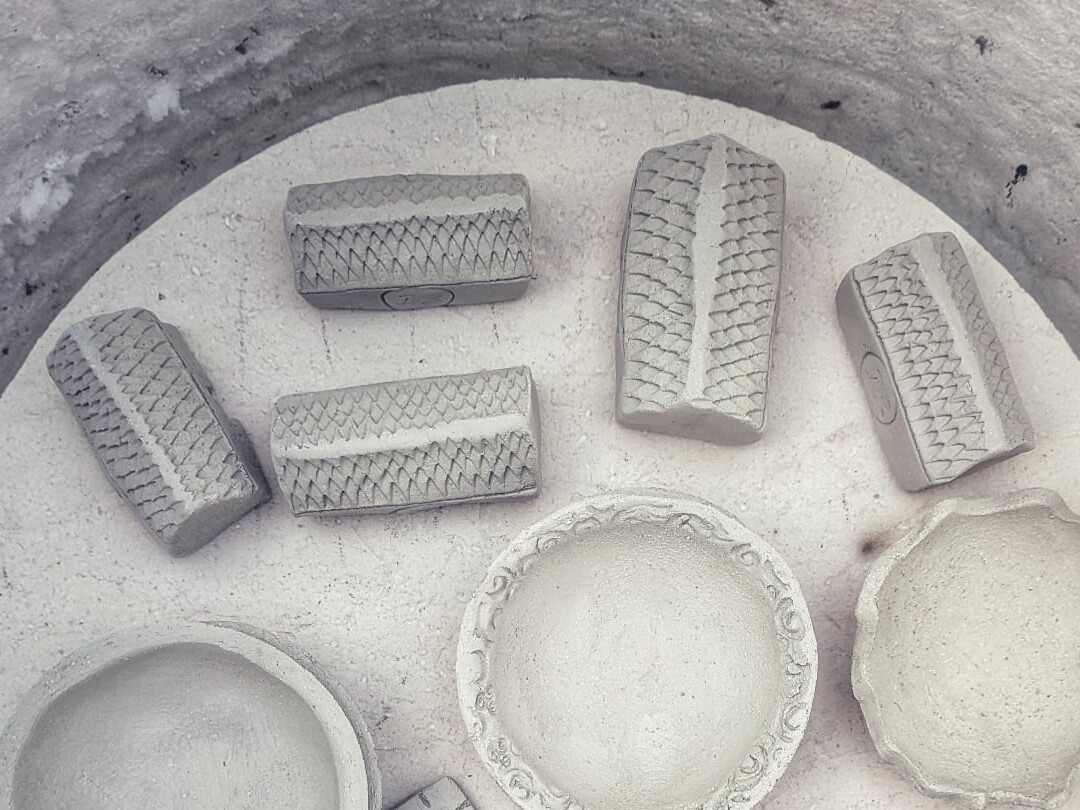
Once the pieces are completely dry, they go through a bisque firing. That makes the clay hard enough to handle and glaze before the raku firing.
I like seeing them at this stage. With no glaze or smoke yet, it is just the shape and the marks from making.

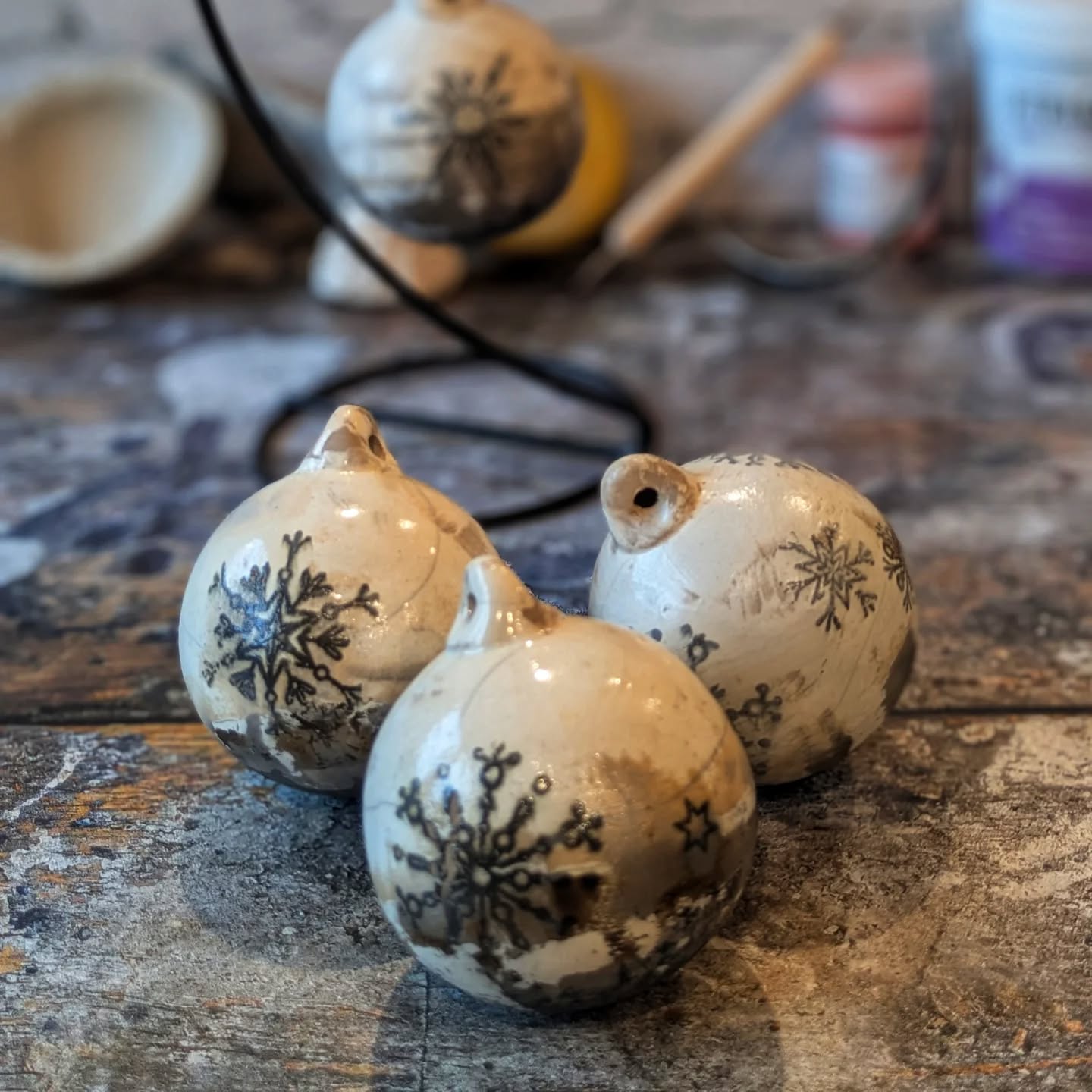
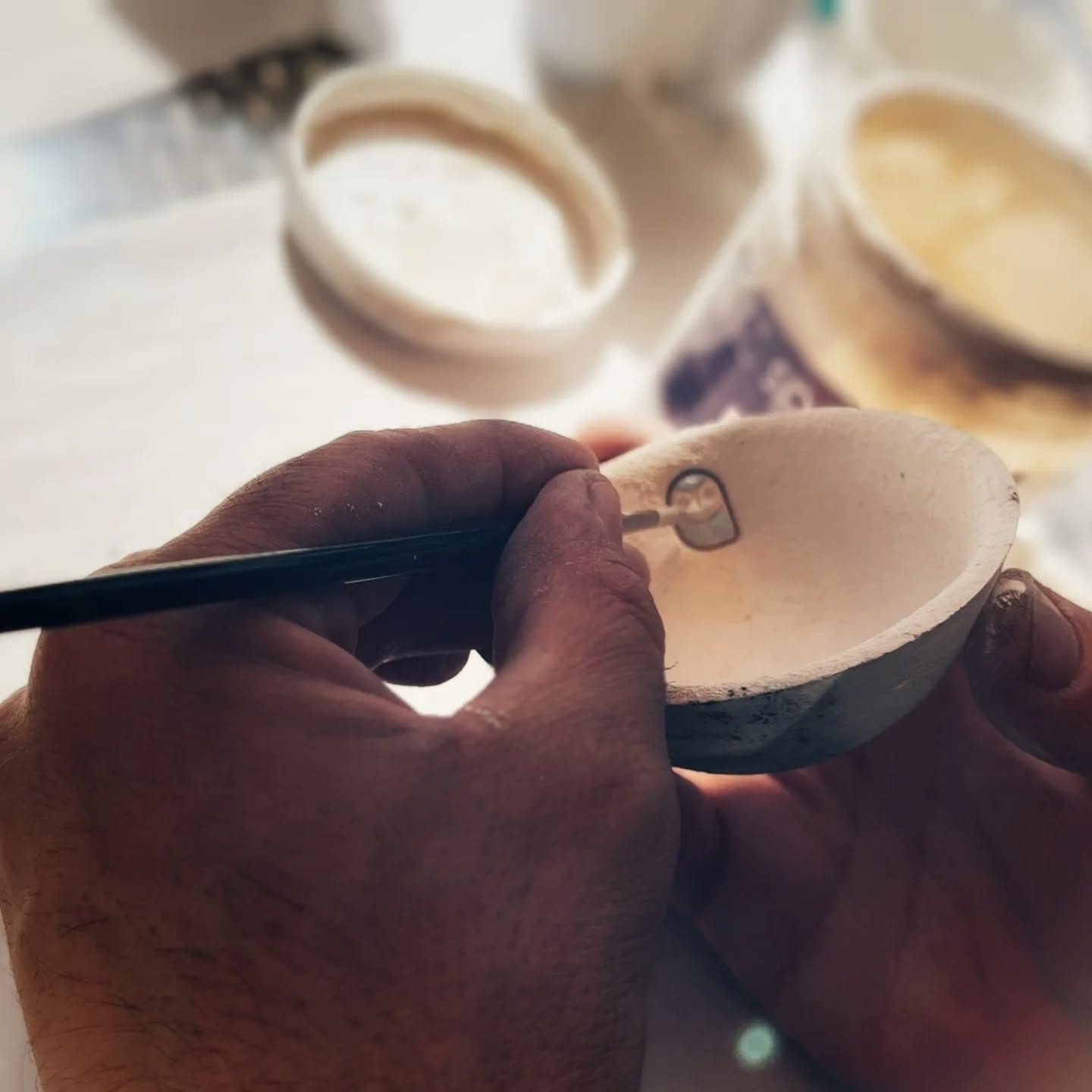
After the bisque firing I add the glaze and any painted details, such as the owl design. I can choose where the glaze goes, but the final colour and surface still depend on what happens in the firing and reduction.


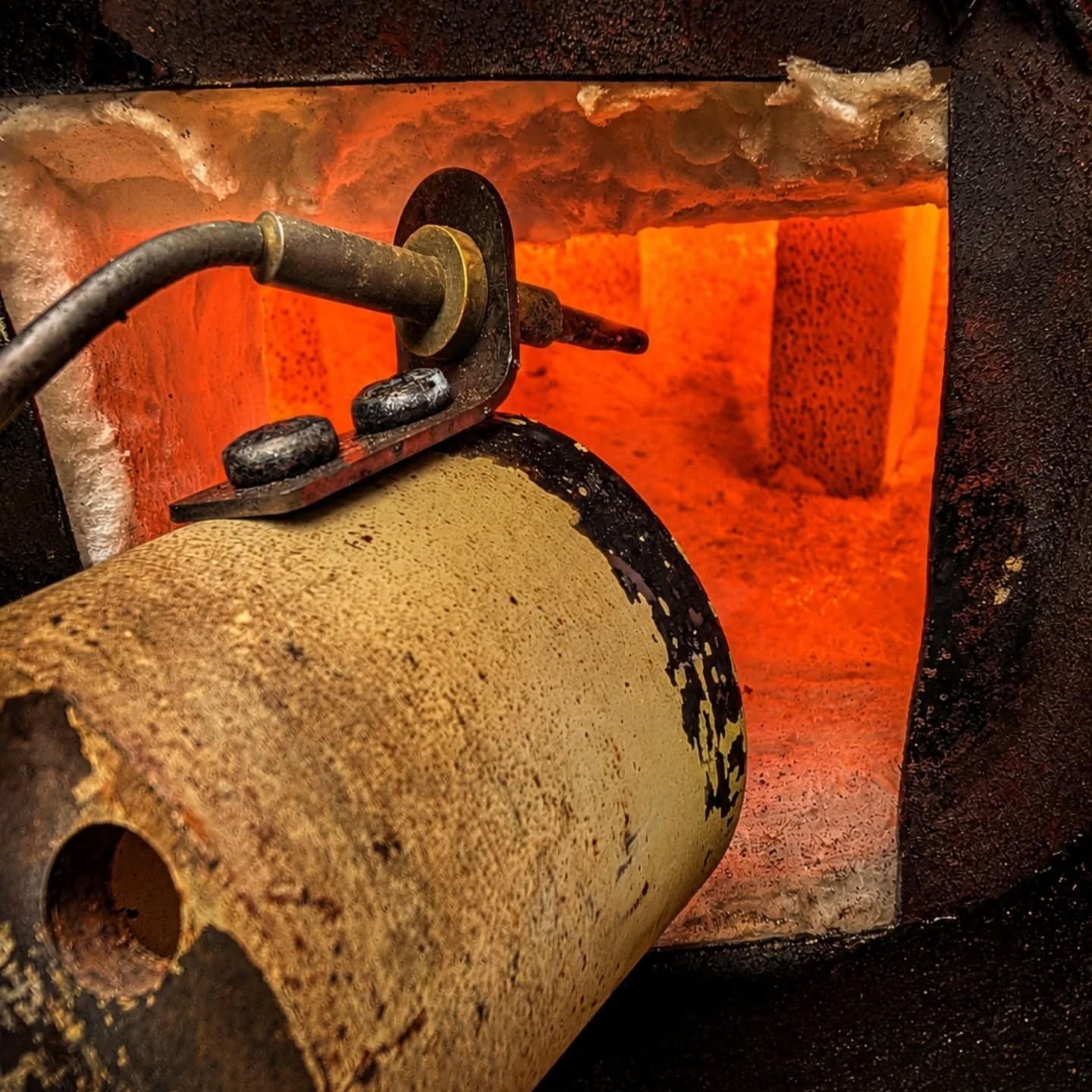
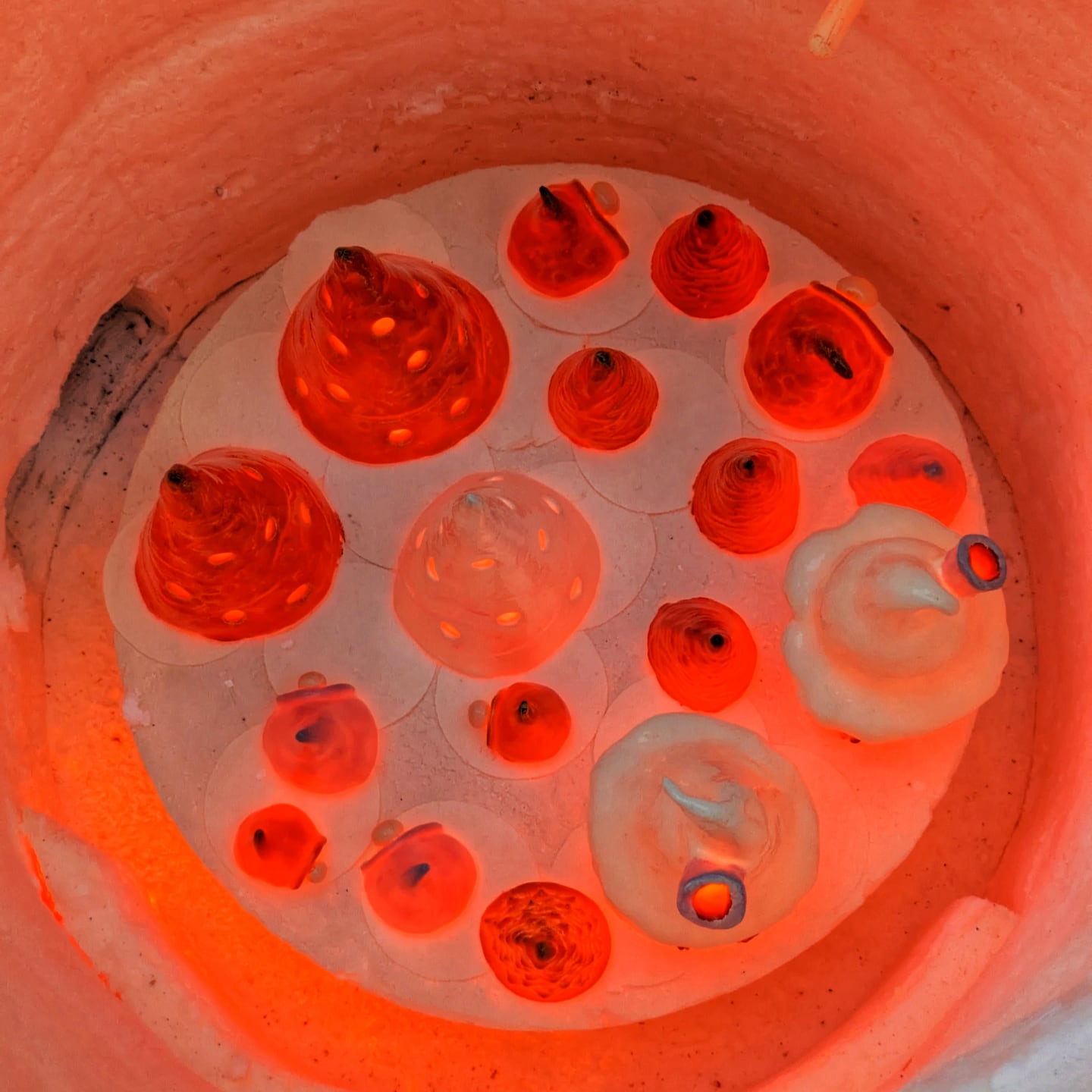
The glazed pieces are fired quickly until the glaze is molten and the work is glowing hot. It is a very immediate way of firing. You can see the heat, watch the kiln and make decisions as you go.

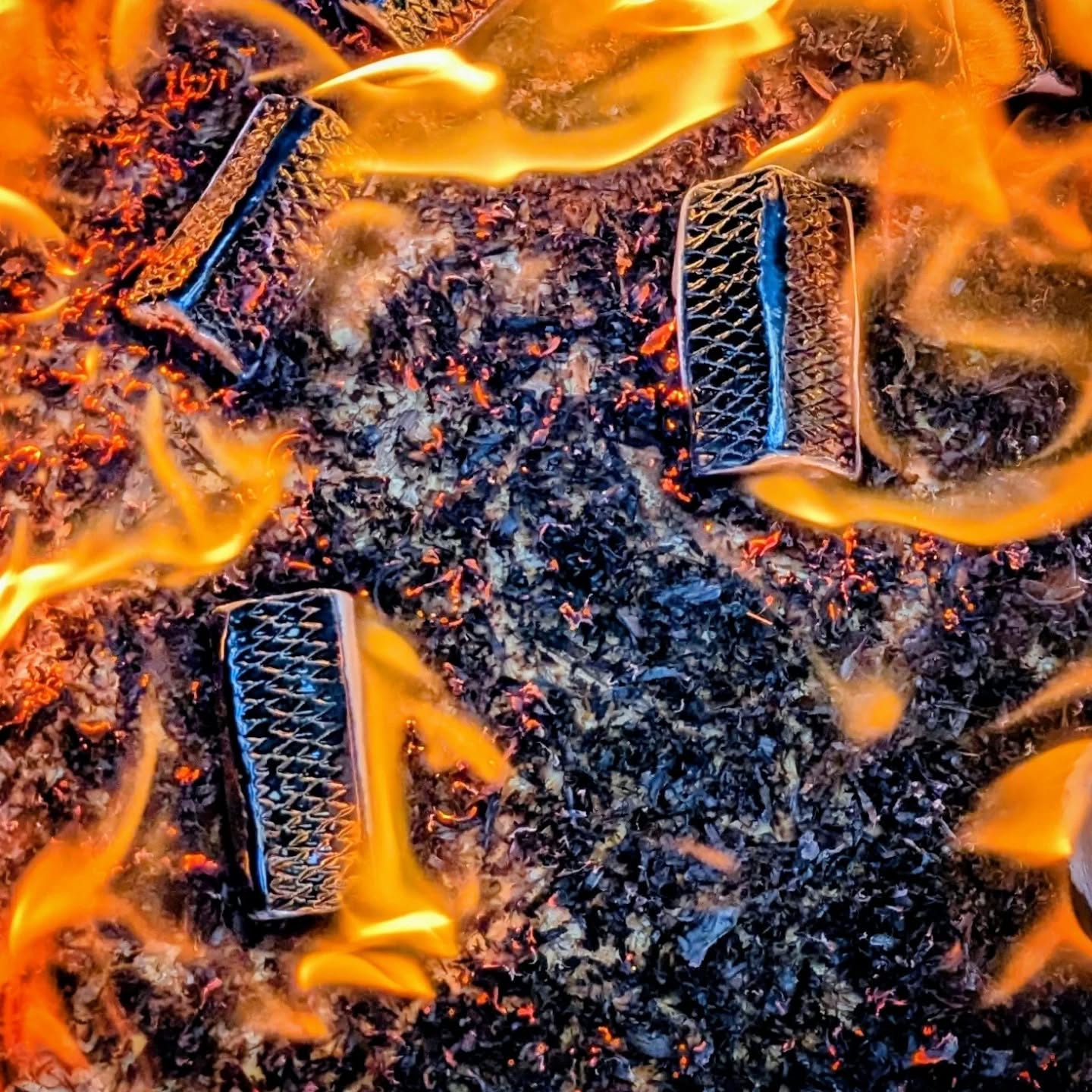
The hot pieces come straight out of the kiln and into combustible material, which catches almost immediately. I then close the container down to reduce the oxygen.
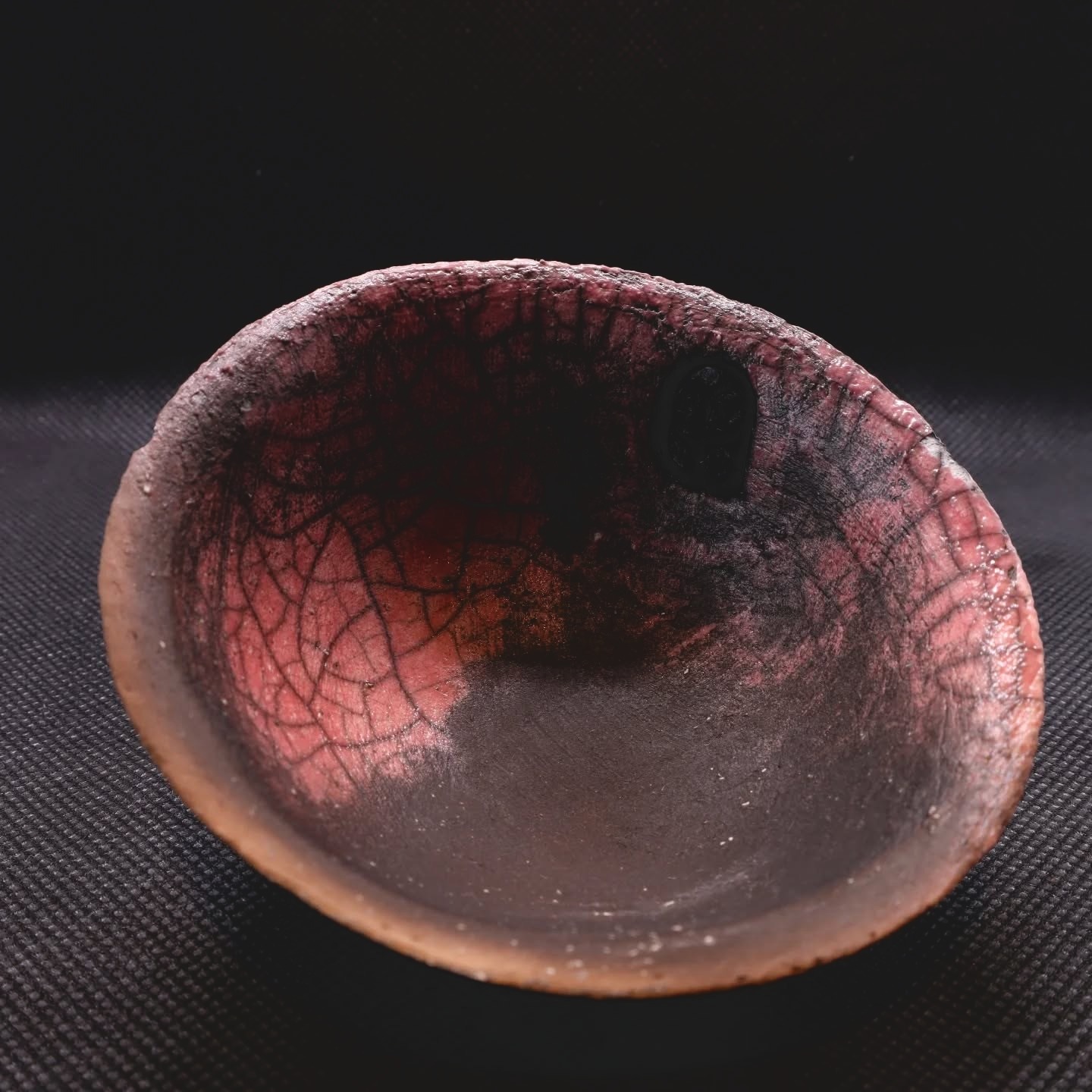
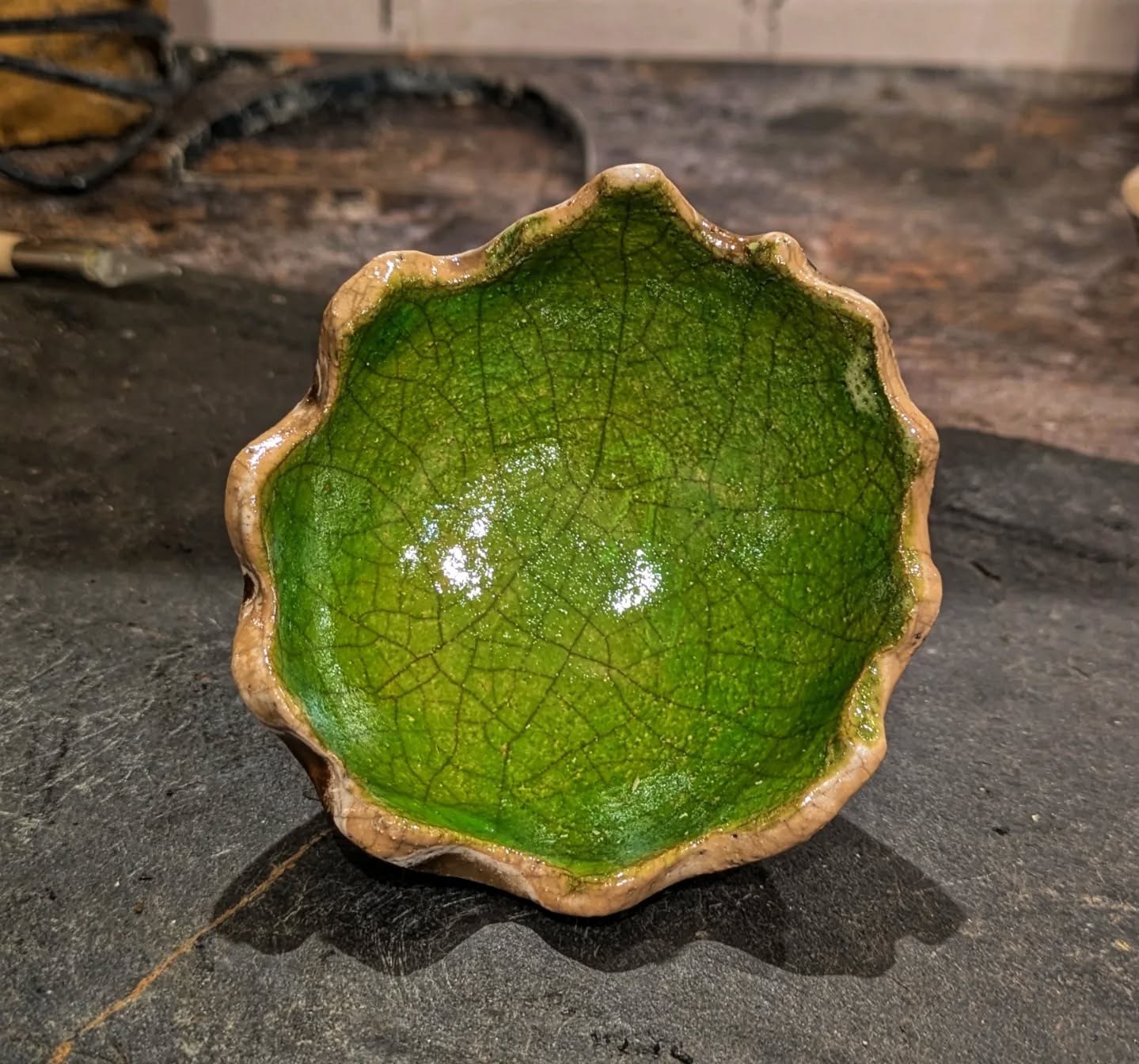
This is where the smoke blackens the bare clay and the glazes start to change. Crackle opens up, metallic colours shift, and no two firings behave in quite the same way.
Opening the reduction container is the point where all of the making, glazing and firing finally comes together. I have a good idea of what I am aiming for, but there is always something the firing decides for itself.