
Brick, fire, clay and colour.
A wander through Middleport Pottery, following the old works from the bottle kiln and cobbled yards into the workshops, mould stores and kiln interiors.
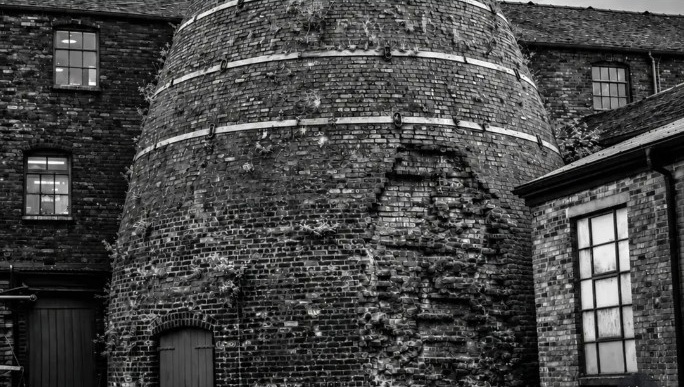
Middleport is one of those places where the history is not tucked away behind glass. Burleigh has been based there since 1889 and the old works still make sense as a place where things were made, and still are. The bottle kiln and brickwork dominate at first, but very quickly you start noticing the smaller things: worn steps, moulds, tools, repairs and all the evidence of repeated work.
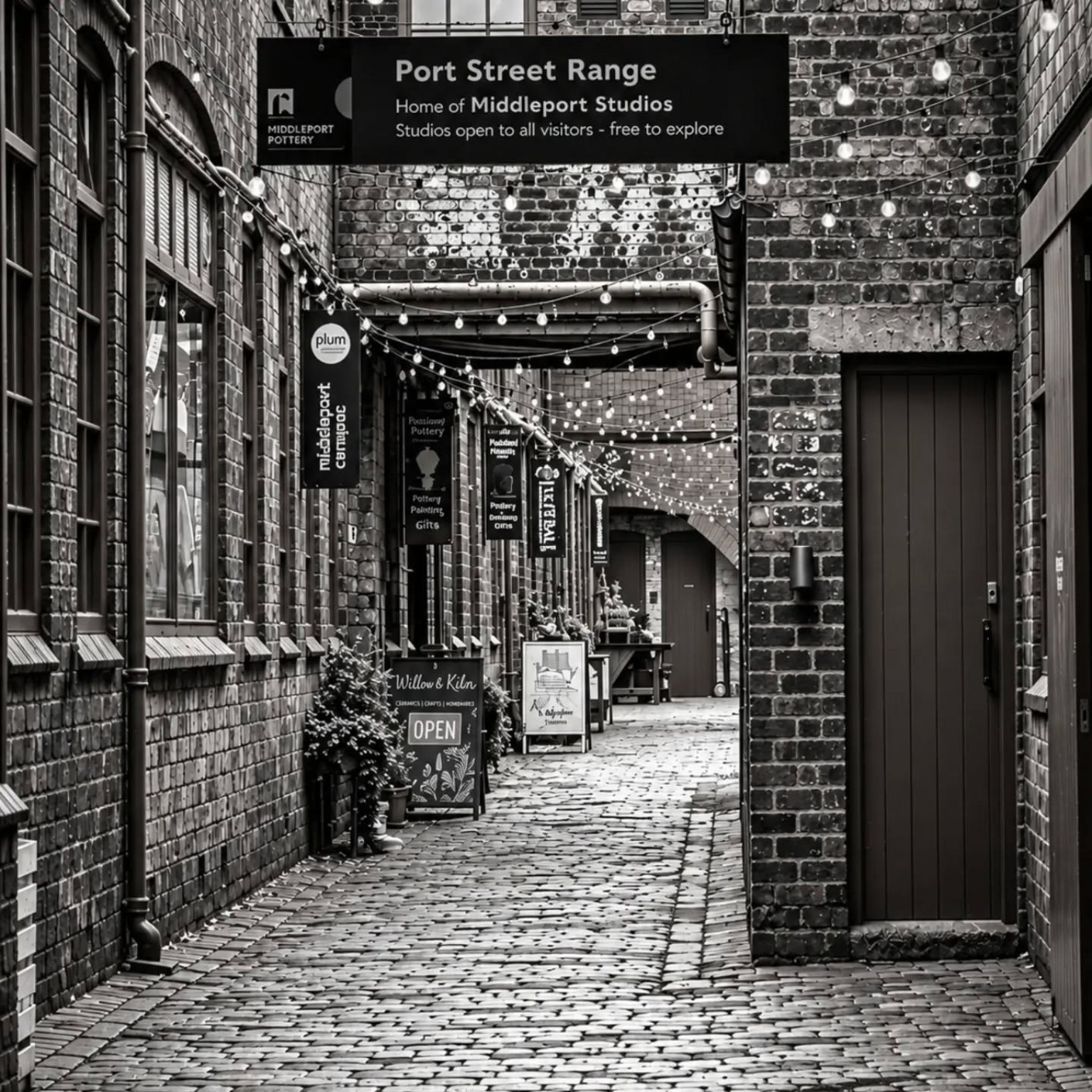
The scale is hard to get from photographs. Walking from the cobbled yards into the workshops, mould stores and kiln interiors makes you think about everything that has to happen before a finished piece appears on a table. There’s a lot of machinery and heavy architecture, but also an enormous amount of judgement and hand skill.
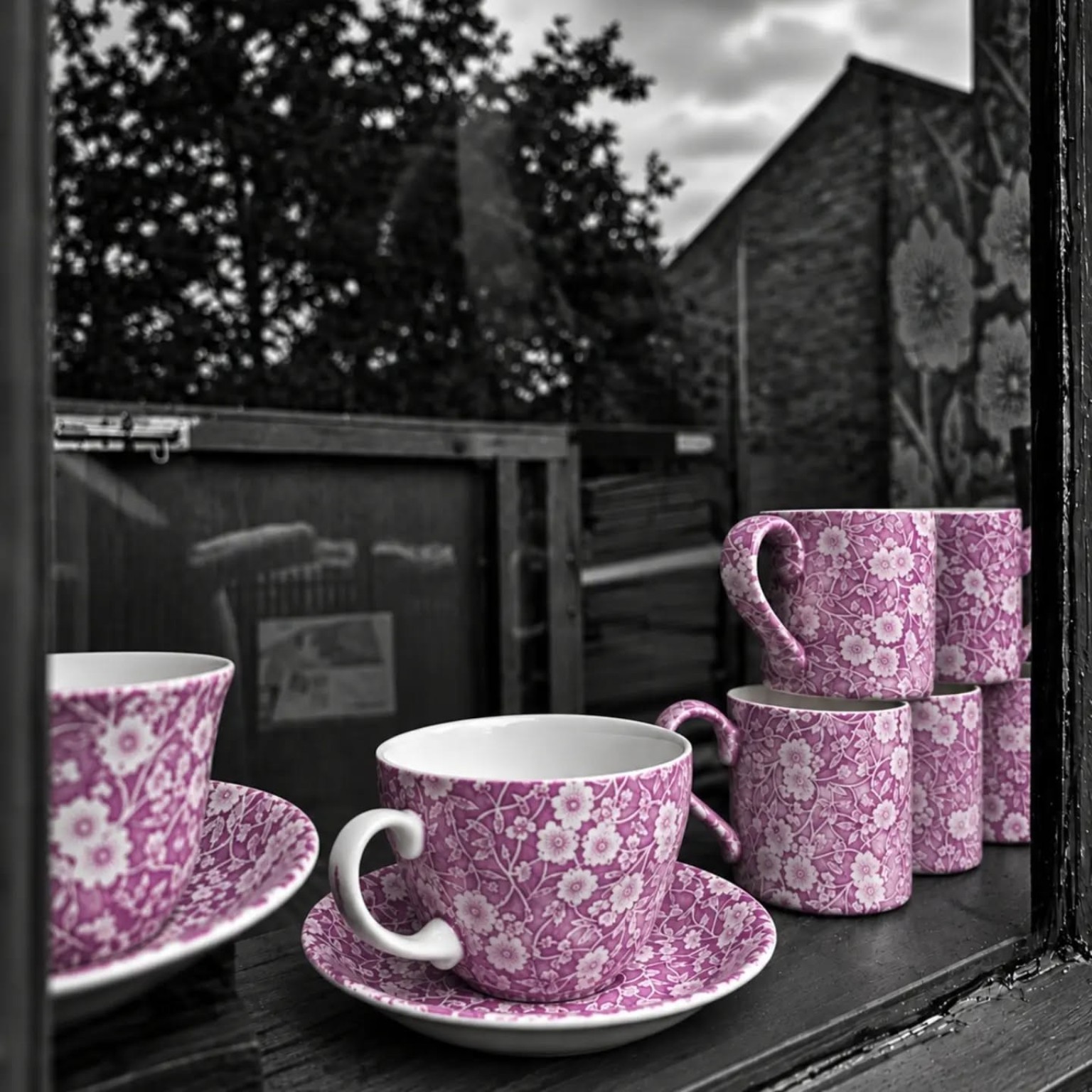
I kept most of the photographs in black and white to emphasise the brick, iron, texture and architecture, allowing colour to stay only where it felt part of the story: the glow of a workshop lamp, light inside the kiln, faded Victorian posters and finally the ceramics themselves. It also made the marks of age, repair and use much easier to see.
I was particularly interested in the repetition. Making pottery at that scale depends on systems and routine, but it also depends on people knowing when something is right. That balance between repetition and small differences feels very familiar, even though my own work is made on a completely different scale.
Raku is a very different process, but I came away thinking about the same basic things: clay carries the marks of how it has been handled, heat changes more than colour, and the finished object never tells the whole story of how it got there.
There’s something extraordinary about seeing the scale and weight of the industrial buildings alongside the delicacy of what was made inside them. I left with a lot of photographs and, more usefully, a renewed appreciation for the knowledge that sits behind even the simplest ceramic object. Plenty to think about back at the bench.
Middleport Pottery